
November, 5 2026 | By Vista Living Care
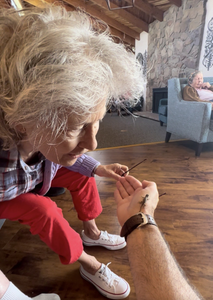
A loved one stops at the edge of a rug, reaches past a cup, or hesitates before sitting in a chair. It may look as though they are being unusually cautious or are not paying attention. Sometimes, the difficulty is connected to how they see or interpret the space around them.
Dementia and vision problems can overlap in several ways. Understanding the difference between eyesight and visual perception can help families respond more thoughtfully and bring useful observations to the care team.
Dementia and Vision: Understanding Eyesight and Perception
Eyesight involves receiving visual information through the eyes. Visual perception involves the brain making sense of that information. Dementia can affect that interpretation, including judging distance or recognizing an object.
Someone may also have an eye condition or need a different glasses prescription. An Alzheimer’s diagnosis should not prevent a person from receiving eye care. The Alzheimer’s Society’s guidance on vision and perception encourages checking for sight problems as well as looking for patterns in the difficulty.
Avoid deciding on the cause from one incident. What looks like a perception problem could involve eyesight, lighting, discomfort, unfamiliar surroundings, or several factors together.
Notice what happens in a particular place
Pay attention to the setting instead of repeatedly asking your loved one to explain what is wrong. Does the problem happen near a window at the same time each day? Is a dark mat difficult to cross? Does an object become easier to find on a plain surface?
| What you observe | Something to check | A possible adjustment |
| Hesitation near a shiny floor | Glare or reflections | Change the lighting or viewing angle. |
| Difficulty finding a cup | Little contrast with the table | Try a plain, contrasting surface. |
| Trouble moving through a hallway | Uneven light or obstacles | Improve lighting and clear the route. |
| Distress near a mirror | Confusion about the reflection | Cover or relocate the mirror if helpful. |
| Repeatedly reaching past an item | Difficulty locating it accurately | Place it within easy reach and identify it. |
These examples can guide a conversation with the care team. They do not establish a diagnosis, and the same adjustment will not help every person.
Make helpful changes gradually
The NHS guide to a dementia-friendly home discusses even lighting, reduced glare, simple surfaces, and contrast that makes objects easier to distinguish.
Begin with the places where your loved one spends the most time. Ask what they find comfortable and observe the result before making another change.
- Keep recommended eye appointments and bring examples of the difficulty.
- Make sure the correct glasses are clean and available.
- Reduce unnecessary visual clutter around frequently used items.
- Keep familiar furniture arrangements where they work well.
- Ask an occupational therapist about persistent difficulties with everyday tasks.
The aim is to make a familiar space easier to use. A wholesale redesign may introduce more unfamiliarity than the person needs. Sometimes repositioning a lamp or changing where a cup is placed is the most useful first step.
Respond to the feeling, too
If a person is frightened by what they see, arguing may add another difficult demand. Acknowledge the concern and offer calm company. You might say, “That looks uncomfortable. Let’s pause here together.”
Ask whether they want help before guiding them physically. Give them time to understand where you are going. If an object is confusing, identify it briefly and allow them to look at it from a more comfortable position.
You do not have to solve the entire problem in the moment. A careful observation to share with the clinician can be a useful outcome.
Changes that need medical attention
Tell the health care team about new visual difficulties, repeated falls or near misses, or seeing things that others do not see. New symptoms should not automatically be attributed to dementia. Sudden loss of vision requires immediate medical care.
Common question
Will new glasses fix the problem?
They may help if eyesight is part of the difficulty. Glasses do not address every change in how the brain interprets visual information, so both eye care and dementia-informed support may be needed.
Care that pays attention
At Vista Living Care, we recognize that the world can look and feel different for someone living with dementia. Our role isn’t simply to help them navigate their surroundings, but to understand how they experience those surroundings and respond with patience, compassion, and respect.
If your family is exploring dementia care, call 505 578 3154 or contact Vista Living Care.