
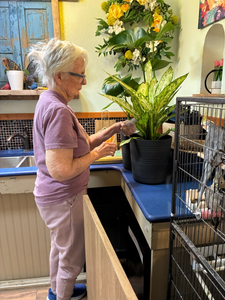
A daily routine for someone living with dementia can provide more than structure. Familiar rhythms can create comfort, support independence, and help each day feel a little more predictable.
For families, establishing daily dementia routines can also make it easier to coordinate care and create opportunities for meaningful engagement.
But the most helpful routines don’t begin with a rigid schedule. They begin with the person.
Someone who has always enjoyed sleeping late may not welcome an early breakfast. A person who spent years reading after lunch may still find comfort in that familiar activity. The goal isn’t to fill every hour. It’s to preserve the habits, preferences, and moments that make life feel like their own.
Start With What Makes the Day Familiar
You don’t need to plan every minute. Instead, identify a few predictable moments that help give the day a comfortable rhythm.
These might include waking up, enjoying breakfast, getting dressed, spending time outdoors, or sharing an activity with someone they love.
The Alzheimer’s Association recommends considering personal preferences, abilities, and the times of day when someone feels most comfortable and engaged.
Ask yourself what has always mattered to your loved one.
Perhaps it’s morning coffee in a favorite chair, listening to music while getting ready, tending to plants, or taking an afternoon walk.
These familiar moments can help create a routine that feels personal rather than imposed.
An Example of Daily Dementia Routines
Every person is different, and routines should reflect individual preferences, energy levels, and care needs.
This example offers a starting point rather than a schedule that everyone should follow.
| Part of the Day | Familiar Activity | Opportunity for Choice |
|---|---|---|
| Morning | Personal care and breakfast | Choosing a comfortable outfit or favorite breakfast |
| Late Morning | An enjoyable activity | Reading together, gardening, or listening to music |
| Midday | Lunch and quiet time | Choosing where to sit or who to eat with |
| Afternoon | Companionship or a familiar task | Folding towels, walking, or spending time outdoors |
| Evening | Dinner and winding down | Listening to favorite music or enjoying a familiar evening ritual |
A successful day doesn’t require completing every activity.
If someone enjoys breakfast and a short visit but needs additional rest afterward, the routine should allow for that.

The purpose of a routine is to support the person, not require the person to follow the routine.
Preserve Independence and Meaningful Participation
Dementia may make it more difficult to begin activities, follow multiple steps, or complete tasks that were once second nature.
But needing assistance doesn’t mean someone has lost the desire to participate.
Instead of taking over an activity, consider how to make participation possible.
You might invite someone to fold a towel, choose between two shirts, water a plant, or help set the table.
Offer one simple invitation at a time and allow room for the person to respond.
The National Institute on Aging’s guidance for everyday dementia care emphasizes familiar routines, respectful communication, and helping individuals remain involved in daily life.
And remember, the value of an activity isn’t determined by how perfectly it’s completed.
A towel doesn’t have to be folded correctly to create a feeling of contribution. A flower doesn’t need to be planted in exactly the right place for gardening to be enjoyable.
Participation, connection, and dignity matter more than the finished task.
Help Everyone Supporting Your Loved One Understand Their Routine
Consistency becomes easier when family members and caregivers understand what makes someone comfortable.
Consider creating a simple guide that includes:
- Preferred waking, meal, and rest times.
- Favorite activities and how to help the person get started.
- Personal care preferences and the assistance they need.
- Important instructions from healthcare providers.
- Family members or care partners to contact with questions.
Include the small details that make a meaningful difference.
For example, “Mom likes her coffee in the blue mug after breakfast” communicates something personal that a general instruction such as “Keep mornings calm” doesn’t capture.
The CDC’s caregiving resources also offer information about coordinating support and maintaining continuity of care.
Share sensitive medical information only with those who need it to provide appropriate care.
Be Flexible as Needs Change
Even the most familiar daily dementia routines may need to change over time.
An activity that once brought enjoyment may become tiring. Someone who previously enjoyed busy afternoons may now prefer quieter surroundings.
When something becomes difficult, consider whether a small adjustment could help.
Could the activity be shorter? Would a different time of day work better? Would it be more comfortable with someone sitting alongside them?
Appointments and outings may also require adjustments. A quieter morning or a restful afternoon can help balance a busy day.
And if your loved one experiences a sudden or significant change in alertness, comfort, or ability, contact an appropriate healthcare professional rather than assuming it’s simply part of dementia.
Flexibility isn’t a failure of the routine. It’s part of responding to the person.
Common Question
Should Someone Living With Dementia Follow the Same Schedule Every Day?
Familiar routines can be reassuring, but they don’t need to be identical every day.
Consistency in meals, rest, and favorite activities may help someone know what to expect. At the same time, personal preferences, energy levels, and changing needs should guide the day.
The goal is a familiar rhythm with room for choice, comfort, and spontaneity.
Making Everyday Moments Meaningful
At Vista Living Care, we believe that meaningful life with dementia is built through relationships, personal preferences, and everyday experiences.
Whether it’s a familiar morning ritual, an afternoon spent gardening, or simply enjoying a cup of coffee together, the smallest moments can create a sense of comfort and belonging.
Our memory care homes in Santa Fe and Las Cruces, along with our specialized home care services, focus on understanding the person behind the diagnosis.
Because a meaningful day isn’t about completing a schedule. It’s about creating opportunities for someone to feel known, valued, and connected.
To learn more about our memory care homes or specialized home care services, call 505 578 3154 or contact Vista Living Care.
Making Moments, Memory Optional.